Clarity at the Core
We explain terms and interfaces with consistent definitions, focusing on what users can observe and configure in everyday workflows.
Boost Reaction • Platform Overview
Boost Reaction stands as a premium knowledge base for automated trading, AI-assisted strategies, and the operational toolkit powering modern markets. Our content is crafted for crisp understanding and side-by-side comparison, revealing system architectures, configurable surfaces, and how monitoring dashboards are typically laid out.
Boost Reaction delivers educational-style explanations of components commonly found in financial software, including workflow orchestration, monitoring dashboards, event logs, and configuration governance. Our aim is to help readers grasp how these pieces interlock and what operational questions they’re designed to answer.
We cover topics such as access governance, audit trails, data handling practices, and session oversight to support informed assessment. Content is intended for general informational purposes and does not constitute personalized guidance.
Our purpose is to deliver clear, neutral, and well-structured information about tools used to automate workflows and oversee operations in dynamic markets. We highlight what features do, how settings are arranged, and which safeguards help minimize human errors.
Boost Reaction strives to elevate comprehension of system behavior and review practices, including configuration checks, exposure boundaries, monitoring routines, and incident-focused logging. We favor plain language, consistent definitions, and compliance-aware framing.
Boost Reaction rests on commitments to accuracy, openness, and responsible portrayal of financial tooling. We arrange content so readers quickly grasp what a feature does, how it affects operations, and how it’s typically reviewed.
We explain terms and interfaces with consistent definitions, focusing on what users can observe and configure in everyday workflows.
We spotlight logs, status signals, and reviewer-friendly summaries as foundations for understanding system activity.
We present automation topics alongside controls like limits and sizing rules to support disciplined governance.
We design for readability, clear headings, and mobile-friendly layouts so content remains usable anywhere.
We steer clear of outcome-centric statements, keeping descriptions informational to aid responsible interpretation.
We iterate structure and explanations to stay aligned with prevailing operational patterns and review workflows.
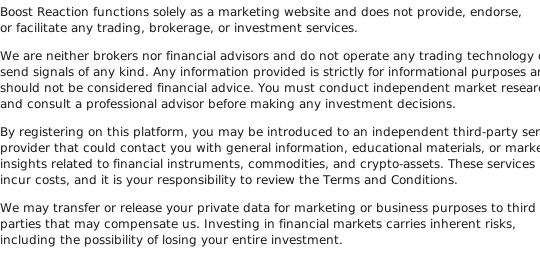
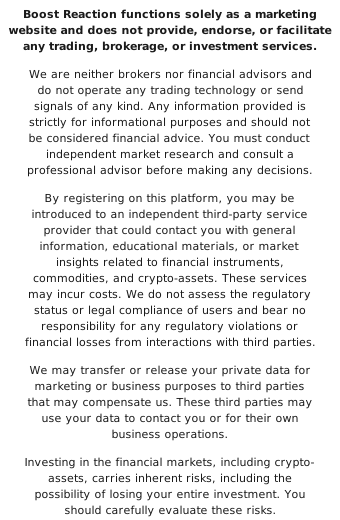
This website functions solely as a marketing platform and does not provide, endorse, or facilitate any trading, brokerage, or investment services.
Read More